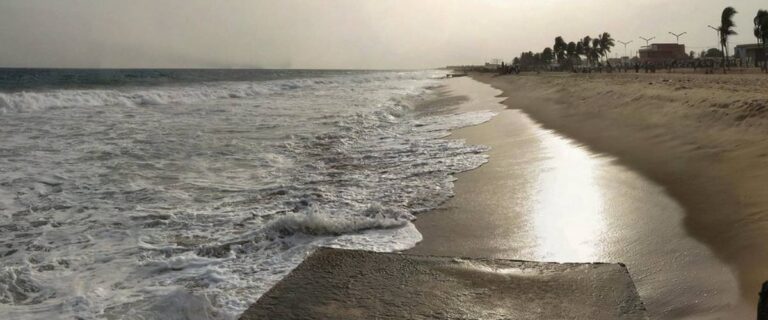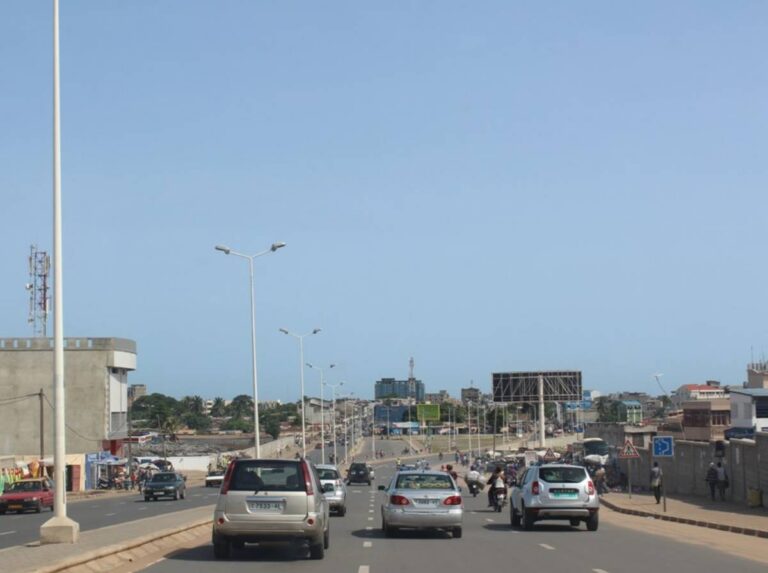
Visa, yellow fever, season, transfers, districts, languages: the 10 mistakes we see most often among first-time travellers to Lomé.
Togo receives close to a million visitors a year, and the Ministry of Tourism counted 685 officially approved establishments as of 22 May 2024. Lomé takes most of the business and leisure traffic, with 1,506,946 passengers recorded at Gnassingbé Eyadéma international airport in 2024, up 6.2% year on year. For a first-time arrival, the country opens up quickly. It still pays to avoid a few mistakes we see repeated at our front desk. Here are the most common ones, as seen from Sanguéra by the ORADYS RESIDENCE reception team.
1. Starting the visa application the day before departure
The Togolese visa is now obtained online, on the official voyage.gouv.tg platform. Applications must be filed at least five days before arrival, and processing takes up to five working days. Many first-time travellers start forty-eight hours before the flight and find themselves without valid documentation at boarding. Payment is made by Visa or Mastercard, or by mobile money through Flooz or Mixx by YAS.
What we recommend: start the process ten days before departure, attach a legible scan of your passport and a copy of your accommodation booking. A confirmed booking at ORADYS RESIDENCE, for instance, makes the file easier to process.
Worth knowing: since 18 May 2026, African nationals holding a valid national passport are exempt from the visa requirement for stays of up to 30 days.
2. Forgetting the yellow fever vaccination certificate
Yellow fever is endemic in Togo. A yellow fever vaccination certificate is required on entry for anyone aged nine months and over, whatever their country of origin. Vaccination must take place at least ten days before departure, at an approved centre. Since 11 July 2016, the WHO has recognised lifelong protection after a single injection: your yellow card remains valid even if it is twenty years old. Without that document, passengers are turned back at Gnassingbé Eyadéma airport.
Use the same medical appointment to check hepatitis A, hepatitis B, typhoid and your DTP booster, all recommended by the Institut Pasteur for Togo.
3. Picking the wrong season
Lomé’s tropical climate alternates between two patterns. The dry season, November to February, brings temperatures between 28 and 33 °C, clear skies and little rain. The rainy season runs March to June, then mid-September to late October, with flooding that can disrupt travel inside the country.
4. Underestimating the airport transfer
Gnassingbé Eyadéma international airport handled 1.5 million passengers in 2024 according to Togo First. Outside the terminal, informal drivers approach in numbers. With no reference point, a first-time traveller can pay three to five times a reasonable fare. Togolese taxis have no meter. The fare is agreed before getting in, and at night a prior booking is the safer option.
What we advise: book your shuttle in advance. ORADYS RESIDENCE runs a shuttle at 15,000 FCFA from the airport to Sanguéra. You land, your driver is waiting, the price is fixed and the journey is secure. The residence is in Lomé’s 1st arrondissement, opposite the Gendarmerie.
5. Travelling without cash or mobile money
The CFA franc (XOF) is the shared currency of the eight WAEMU countries. Its euro parity is fixed: 1 EUR = 655.957 XOF, the official rate published by the BCEAO. ATMs accept Visa and Mastercard within Lomé, but outside the capital cash is the only means of payment accepted. Mobile money has 3.55 million users in Togo, with Flooz taking around 78% of transaction volume according to Togo First. Many retailers accept only those two methods.
Plan for 50,000 to 100,000 FCFA in cash on arrival, and activate Flooz or Mixx by YAS through your local operator to pay for taxis, meals or quick errands without carrying too many notes.
6. Booking anywhere, assuming all districts are alike
Lomé stretches along some twenty kilometres of coast, out of the 50 to 56 that make up Togo’s shoreline. Districts differ in atmosphere, noise level and how safe they feel. The city centre (Boulevard du 13 Janvier, the administrative quarter) stays busy until late. Hédzranawoé, Agoè and Adidogomé hold much of the middle class. Sanguéra, in the 1st arrondissement, keeps a quiet residential character. ORADYS RESIDENCE has been there since 2020, a few metres from the Gendarmerie, which reassures expatriates on a first posting and families with children. Wherever you stay, avoid walking alone on the beaches and the seafront after dark: French, Belgian and Canadian consular advice all agree on that point.
On an institutional assignment, a quiet district improves sleep after dense days of meetings. For a banking executive in training, the connection to the Boulevard de la Paix remains workable from Sanguéra thanks to the internal shuttle.
7. Trying to do all of Lomé in three days
The capital holds the Adawlato market (formerly the Grand Market), the Akodessewa fetish market, the Sacré-Cœur cathedral, the National Museum, the Independence Monument, several beaches and a busy shoreline. Seventy-two hours are enough for an overview, not for depth. If you are staying a week, set aside a day for Aného (45 km east) and a trip to Kpalimé (120 km north-west) for Mount Agou and the Womé falls.
Over three days, two districts covered on foot beat six crossed by car.
8. Assuming French is always enough
French is Togo’s official language, spoken by around 41% of the population — 3.9 million speakers out of 9.5 million inhabitants in 2024. The two national languages protected since 1975, Ewé (with Mina as a variant) in the south, Lomé included, and Kabyé in the north, remain dominant in informal exchanges. A few words of Ewé open doors: “ndi” (hello), “akpé” (thank you), “lè édjè” (how much). At the market, a trader hears the effort and the tone shifts.
9. Treating a work trip like a holiday
Business travellers on assignments of several weeks have concrete needs: reliable wifi, a quiet place to work, breakfast served early, a kitchen to cook a meal after a late meeting. Staying in a standard hotel for three weeks costs more and wears on morale. Over three weeks, the kitchen and the desk end up mattering more than room service.
ORADYS RESIDENCE has 21 apartments across four categories, from the 18 sqm studio at 15,100 FCFA a night to the 141 sqm three-bedroom from 26,200 FCFA. Every apartment has air conditioning, wifi and furniture made by Togolese craftsmen; depending on the category, a balcony or a terrace. An on-site seminar room takes management committees, training sessions and workshops, which saves commuting between the accommodation and a separate venue.
10. Overlooking intercity transport
In town, the zem (motorbike taxi) is fast and cheap. The Gozem app lets you fix the fare in advance, which avoids negotiating each ride. On intercity roads it is not advisable. To reach Aného, Kpalimé or Atakpamé, hiring a vehicle with a driver is the better option. ORADYS RESIDENCE keeps two vehicles in its own fleet: a Hyundai Creta Grand (seven-seat SUV, suited to families and trips out) and a Toyota 4Runner (all-purpose 4×4 for city and country). Booking ahead saves improvising a driver the night before. For the Savanes region in the far north, written authorisation from the Togolese Ministry of Defence is required: it must be requested thirty working days in advance, and the security state of emergency there has been extended to March 2027.
What to take away before a first trip
Every mistake above can be corrected before departure. Handle your formalities early, pick the right season, make your journeys secure, and settle on accommodation that fits your situation. Sanguéra is thirty minutes from the airport and stays quiet at night, which is what long assignments end up looking for. Our team is reachable for questions, for arranging the airport shuttle, and for preparing the seminar room if the assignment includes group work.
Frequently asked questions from first-time travellers to Togo
Do I need a visa for a stay of under 30 days?
Yes for most non-African nationals. Applications go through voyage.gouv.tg, at least five days before arrival. African nationals holding a national passport are now exempt, following the extension announced by the Togolese authorities on 18 May 2026.
What is the time difference with Paris?
Togo is on GMT+0 all year. The difference with mainland France is one hour in winter, two in summer. There is no difference with the United Kingdom, Senegal or Côte d’Ivoire for most of the year.
What daily budget should I plan for in Lomé?
For a comfortable stay, allow 40,000 to 60,000 FCFA a day excluding accommodation (meals, transport around town, small purchases). Accommodation varies with the format chosen: from 15,100 FCFA a night for a furnished studio at ORADYS RESIDENCE, from 26,200 FCFA for a three-bedroom suited to a family.
How do I contact ORADYS RESIDENCE before arriving?
By phone on +228 92 05 49 49 and +228 70 90 43 43, or by email to contact@oradysresidence.com and servicecommercial@oradysresidence.com. Our reception team also answers through oradysresidence.com and can arrange your airport shuttle ahead of the flight.